Creator Programs can get ChatGPT Talking About Your Brand

AI tools like ChatGPT, Gemini, & Perplexity are increasingly shaping how people discover brands. So, how best to get your brand or organization in ChatGPT’s answers? 

Recent research suggests the answer looks surprisingly familiar. The same things that build trust with people also shape visibility in AI-generated answers. Brands that are widely talked about online, mentioned by credible sources, and embedded in real conversations are more likely to appear when AI tools generate recommendations or explanations.
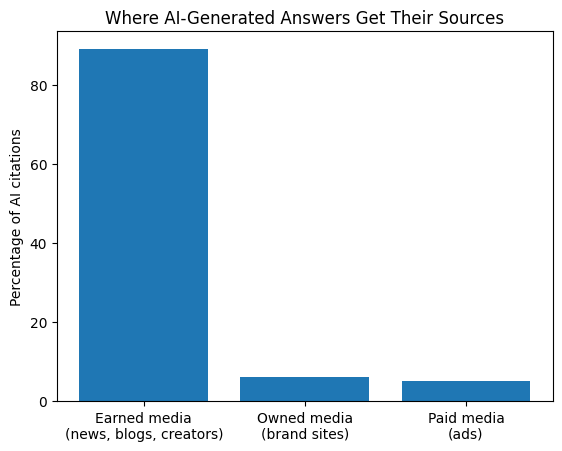
This is where influencer marketing, especially microinfluencer and creator-led content, quietly matters. Studies from firms like Semrush, Seer Interactive, and Muck Rack show that AI systems overwhelmingly rely on earned media and organic mentions, not ads. One analysis found nearly 90% of AI citations come from unpaid sources like blogs, forums, reviews, and news coverage. When real people talk about a brand in public, indexable places like YouTube, Reddit, blogs, or creator newsletters, those mentions become part of the broader information ecosystem AI models draw from.

Microinfluencers are particularly powerful here. Their content tends to live in places AI systems value: long-form posts, product walkthroughs, community discussions, and firsthand reviews. Even when links are nofollow or informal, brand mentions themselves function as trust signals. SEO researchers increasingly describe these mentions as the new backlinks, because they help establish context, relevance, and authority. Brands that show up repeatedly in authentic creator conversations are more likely to be associated with specific categories or use cases in AI-generated answers.

The takeaway is not that brands should chase AI visibility directly, but that investing in real people telling real stories has compounding effects. Influencer marketing has always been about credibility and reach. Now it also shapes how brands exist in machine-mediated discovery. As search becomes less about blue links and more about synthesized answers, the brands that win will be the ones embedded in genuine human conversations long before an AI is asked to summarize them.

People First is uniquely positioned for this shift because our work has always centered on microcreators, local organizing, and niche subject-matter experts rather than a million followers for scale’s sake. We focus on real people who are already trusted in their communities and professional circles, whether that’s a local organizer, a policy expert, or a practitioner in a specific B2B field. That kind of credibility produces the type of content that actually lives online in meaningful ways: thoughtful posts, conversations, explainers, and references that last. As AI systems increasingly surface what the internet collectively agrees is credible, our approach aligns naturally with how both people and machines learn who to trust.

AI tools like ChatGPT, Gemini, & Perplexity are increasingly shaping how people discover brands. So, how best to get your brand or organization in ChatGPT’s answers? 

Recent research suggests the answer looks surprisingly familiar. The same things that build trust with people also shape visibility in AI-generated answers. Brands that are widely talked about online, mentioned by credible sources, and embedded in real conversations are more likely to appear when AI tools generate recommendations or explanations.

This is where influencer marketing, especially microinfluencer and creator-led content, quietly matters. Studies from firms like Semrush, Seer Interactive, and Muck Rack show that AI systems overwhelmingly rely on earned media and organic mentions, not ads. One analysis found nearly 90% of AI citations come from unpaid sources like blogs, forums, reviews, and news coverage. When real people talk about a brand in public, indexable places like YouTube, Reddit, blogs, or creator newsletters, those mentions become part of the broader information ecosystem AI models draw from.

Microinfluencers are particularly powerful here. Their content tends to live in places AI systems value: long-form posts, product walkthroughs, community discussions, and firsthand reviews. Even when links are nofollow or informal, brand mentions themselves function as trust signals. SEO researchers increasingly describe these mentions as the new backlinks, because they help establish context, relevance, and authority. Brands that show up repeatedly in authentic creator conversations are more likely to be associated with specific categories or use cases in AI-generated answers.

The takeaway is not that brands should chase AI visibility directly, but that investing in real people telling real stories has compounding effects. Influencer marketing has always been about credibility and reach. Now it also shapes how brands exist in machine-mediated discovery. As search becomes less about blue links and more about synthesized answers, the brands that win will be the ones embedded in genuine human conversations long before an AI is asked to summarize them.

People First is uniquely positioned for this shift because our work has always centered on microcreators, local organizing, and niche subject-matter experts rather than a million followers for scale’s sake. We focus on real people who are already trusted in their communities and professional circles, whether that’s a local organizer, a policy expert, or a practitioner in a specific B2B field. That kind of credibility produces the type of content that actually lives online in meaningful ways: thoughtful posts, conversations, explainers, and references that last. As AI systems increasingly surface what the internet collectively agrees is credible, our approach aligns naturally with how both people and machines learn who to trust.