
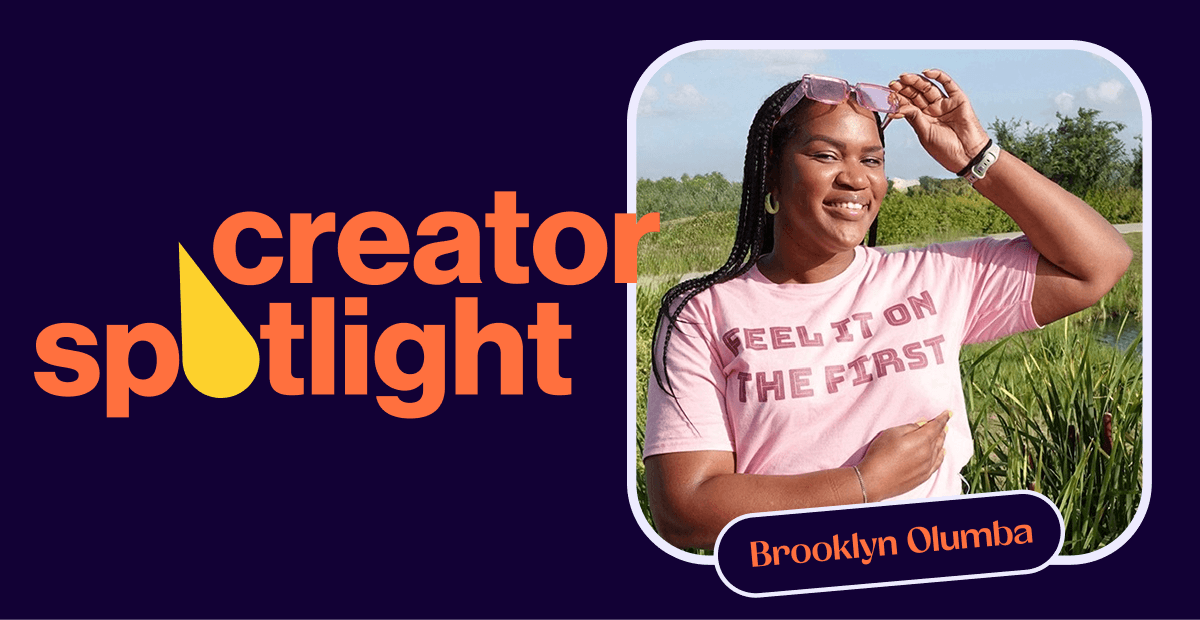
Born and raised in King George, Virginia, and a graduate of Hampton University, Brooklyn Olumba didn’t plan on becoming an advocate. But at just 28 years old, a breast cancer diagnosis changed everything — including the reason she began posting online.
What started as a way for Brooklyn to process her experience quickly became something much bigger. After completing chemotherapy and radiation, she searched for other young women — especially women of color — who looked like her and were openly sharing their breast cancer journeys. She could barely find any. That’s when it clicked: she needed to become the person she had been searching for.
She began sharing her story at the end of her diagnosis year, using her platform as a form of patient advocacy. Her content picked up quickly, but more importantly, it began reaching women across the world. Messages poured in from different countries — women sharing that they had started performing regular self-breast exams because of her page, or that they had become advocates within their own communities.
One message, in particular, stays with her. A college student in South Africa had discovered a lump months earlier but kept postponing a follow-up appointment because she was busy. After coming across Brooklyn’s content, she decided to get checked. She was diagnosed with stage 1 breast cancer. She later shared that if it weren’t for Brooklyn’s page, she likely wouldn’t have gone in anytime soon. Moments like that make the negative comments easier to ignore.
Like many creators, Brooklyn has faced criticism and doubt. She understands why so many people hesitate to post at all — the fear of judgment and the vulnerability that comes with sharing your story. “Geez, I still feel cringy! If I waited until I felt perfectly polished, I’d never post anything meaningful. Vulnerability feels uncomfortable at first for sure, especially as a young Black woman talking about breasts, cancer, scars, hormones, grief. However, someone once told me that someone is always watching quietly. Someone who hasn’t told their family yet. Someone who feels alone after a new diagnosis of breast cancer. Someone Googling at 2 a.m. If my discomfort creates a connection for them, it’s worth it and I’ll take all the cringe.”
Brooklyn feels a deep responsibility to share information that is accurate, not just viral. She doesn’t rely solely on social media for health information. Instead, she reads medical guidelines, listens to clinicians, and follows oncologists and researchers. If something sparks immediate outrage or validation, she pauses and verifies before sharing.
Recently, she shared a reflection that resonated deeply on the topic of the future. “This is so heavy because there is so much grief in knowing I’m not the same. I imagined a body that wasn’t medicalized. I imagined having children without fertility consults and hormone discussions. I imagined not knowing the language of recurrence rates and going to the doctor only once a year for an annual physical instead of the 6-8 times I go. I imagined not measuring time in scan intervals and years of surviving cancer. Cancer changes how you think about aging, identity, even relationships. I’m still learning to accept all of this and learn what this new normal looks like for me.”
Despite the heaviness, Brooklyn’s message to women who feel scared to get checked is simple: “I tell my audience all the time that being scared is normal and going anyway is brave. You don’t have to be fearless to book the appointment. Bring a friend. Write down your questions. Also, if you need a virtual hype girl, send me a message because I’m your girl!
As part of the People First Creator Community, Brooklyn values working with brands that align with her values and allow her to make a meaningful difference. For her, partnerships are opportunities to extend her impact. Especially to young POC women.
Brooklyn has become a powerful voice for young women navigating one of the most life-altering diagnoses imaginable. Sometimes, it’s about helping one person decide to make an appointment that could save their life.