
Now’s the time to integrate influencers and creator content into your organization’s End-Of-Year giving campaigns. M&R says the average nonprofit raises 37% of its yearly revenue in December alone, and there is more data this year than ever supporting using creators as part of your fundraising toolkit.
I’ve done digital fundraising for a long time. As a 21 year-old, I watched Joe Trippi fill up the bat on the DeanForAmerica site to raise some of the first online Presidential primary money. In my late 20s, I worked at Blue State as we applied the Obama Campaign tactics to other candidates and global organizations. From blogs, to email, to sms, to social, I’ve seen digital fundraising evolve over the past 25 years.
Seven years ago, when we started People First, we laid the foundation for influencer work across social impact and Democratic politics. In 2019, our clients focused on awareness. Then they started to focus on persuasion, and now we’ve been able to integrate creators into true acquisition and fundraising campaigns. Creators should be part of your entire communications funnel.
Now, we’ve run dozens of national and local fundraising campaigns for political, advocacy, and social good nonprofits. We’ve learned a lot, and we’re sharing some of those lessons to stand out from the crowd and raise more money below:
Choose Your Audience: Are you looking to raise small dollars from new donors? Reengage former donors who’ve gone cold? Re-market to likely donors already receiving your emails and texts? Each of these audiences requires different types of creators and content.
Pick Your Strategy: Creators can be engaged in many different ways to promote fundraising. A climate organization can recruit a cohort of green-tech creators who post often during December and are compensated with affiliate fees. A healthcare nonprofit could pay 20 Mid-Tier nurse creators directly to post twice during December with a clear fundraising ask. An LGBT organization could ask 30 young gay creators to produce UGC videos asking Gen-Zers to make their first small donation in support of the organization, and use that content in paid media. The most successful campaigns will use a mix of these strategies to achieve their goals.
Use Creator Content in Paid: After you’ve picked your audience and strategy, make sure you’re integrating creator content into your paid media program. We’ve run programs with over a 300% ROAS (return on ad spend) because the creators, content, and audience were so well aligned. For example, show older, established creators to your Gen-X/Boomer donor audiences, but Gen Z creators to small-dollar, new-donor audiences. In-feed creator posts can be whitelisted and boosted, while UGC can be clipped and optimized across your brand channels to drive performance.
- Optimize: Your paid program is the best way to optimize creator content for top performance. Tracking with UTMs allows you to see which creators are performing best, and you can return to those creators for additional UGC videos, testing different headlines, video copy, CTA timing, and more. We’ve seen small details, like how formally a creator is dressed, affect performance. Once you find a creator who’s connecting with your audience, experiment with new takes.
- Remember the Ladder of Engagement: Sometimes someone isn’t ready to give right away, so having a creator ask them to sign a petition or pledge, then following up later with a donation ask by email, and then remarketing to them on social to donate using the same creator, can drive real results. As I said on the Hello Merge podcast a few months ago, “Email is still where you’re going to get most of your fundraising.” I don’t mean influencers and paid media don’t work, but I do mean the best EOY fundraising campaigns use a holistic communications approach to stay in front of their best prospects.
- Repurpose Creator Content: Outside of paid media, your EOY creator content can be used across your brand social channels, donation landing pages, emails, and more. Having a UGC creator ad on social asking people to donate drive to a landing page featuring the same creator saying, “So glad you’re here. Now let’s finish this donation,” creates a very cool, modern user experience.
- Get Social: Asking creators to respond to comments and answer questions is an easy way to drive more engagement and action. We’re also big fans of ManyChat and are even using Meta’s new auto-DM feature.
We hope these tips help your organization raise more money online this giving season! Book a meeting with us if you’d like to chat about how People First and our industry-leading social impact creator community can help you drive revenue.
We went LIVE to talk creator fundraising. Tune in!
You’re Invited: The Biggest Online Event of the Midterms
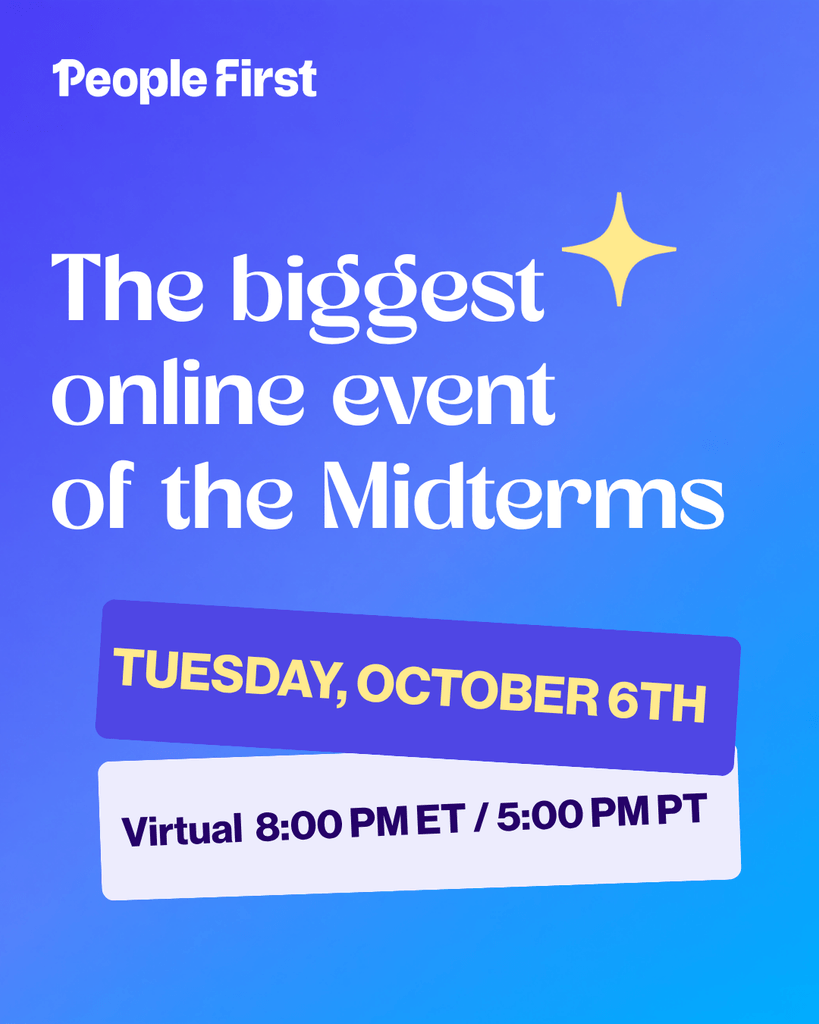
On Tuesday, October 6 at 8 PM ET, the People First creator community will host a virtual GOTV rally—the largest creator rally of the midterms—to support Democratic candidates.
The event will feature a mix of creators, strategists, and candidates discussing why the 2026 election is so important and how creators can get involved in getting out the vote. We expect around 1,000 creators to attend, representing more than 100 million followers!
We hosted Creators for Kamala in October 2024. It was, by a wide margin, the largest creator gathering in support of Kamala, and we expect this event to draw a similar audience.