Modern Problems With An Old Playbook

What it really means to build campaigns for today’s media landscape

Democrats Are Falling Behind in Voter Registration, But Creators Can Help

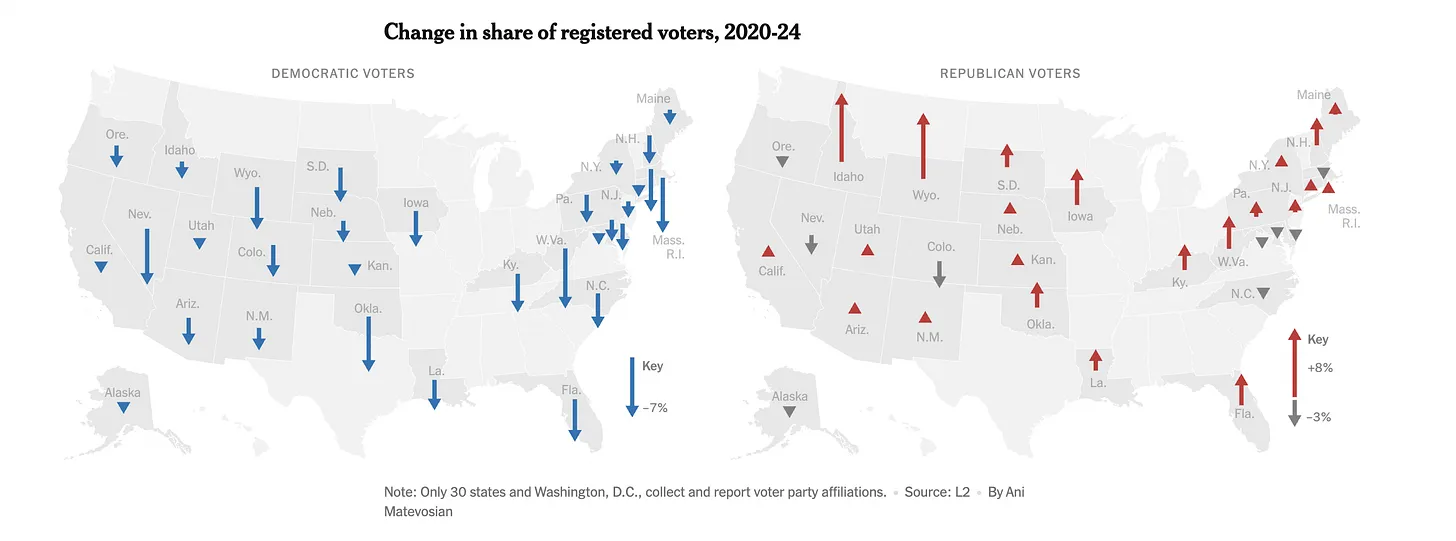
Democrats are losing ground in voter registration across the country.

From The New York Times“Of the 30 states that track voter registration by political party, Democrats lost ground to Republicans in every single one between the 2020 and 2024 elections, and often by a lot.
This decline comes in an era when Democrats have become the party of the likelier voter. As the saying now goes, when people don’t vote, Democrats win. That means traditional non-partisan voter registration drives could actually backfire by adding more MAGA voters to the rolls than Democrats.

Aaron Strauss, a data scientist who has studied Democratic mobilization for years, warned in a pre-2024 memo: “If we were to blindly register nonvoters and get them on the rolls, we would be distinctly aiding Trump’s quest for a personal dictatorship.”

However, creator content can help lead the way for more targeted C3 and C4 voter registration efforts. 

C4 groups, which are permitted to use explicitly political messaging, can register likely Democratic voters with partisan appeals. For example, “Democrats support quality healthcare for all. Register to vote to make this a reality.” When paired with the right messengers such as college aged women, who already tend to lean Democratic, these campaigns can drive targeted results.
While C3 groups cannot be overtly political, they can partner with creators who reflect the demographics and geographies of likely Democratic voters, helping to build cultural relevance, trust, and a more targeted audience. 

Both types of groups can amplify creator campaigns through targeted paid media. For example, showing content made by college women in Ohio to other college women in Ohio. That surround sound effect normalizes voting within peer groups by showing that people who look like you, live where you live, and share your experiences are voting, and you should too.

If Democratic groups and funders want voter registration to benefit Democrats and not MAGA, they must invest now, and creators should be central to that strategy.

The clock is ticking: 

“Any hope that the drift away from the Democratic Party would end organically with Mr. Trump’s election has been dashed by the limited data so far in 2025. There are now roughly 160,000 fewer registered Democrats than on Election Day 2024, according to L2’s data, and 200,000 more Republicans.” 


        What it really means to build campaigns for today’s media landscape

        Democrats Are Falling Behind in Voter Registration, But Creators Can Help

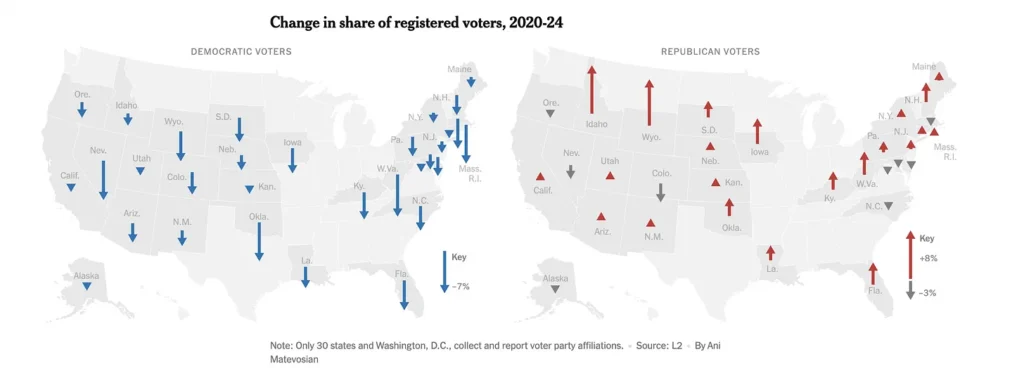
        Democrats are losing ground in voter registration across the country.

        From The New York Times“Of the 30 states that track voter registration by political party, Democrats lost ground to Republicans in every single one between the 2020 and 2024 elections, and often by a lot.

        This decline comes in an era when Democrats have become the party of the likelier voter. As the saying now goes, when people don’t vote, Democrats win. That means traditional non-partisan voter registration drives could actually backfire by adding more MAGA voters to the rolls than Democrats.

        Aaron Strauss, a data scientist who has studied Democratic mobilization for years, warned in a pre-2024 memo: “If we were to blindly register nonvoters and get them on the rolls, we would be distinctly aiding Trump’s quest for a personal dictatorship.”

        However, creator content can help lead the way for more targeted C3 and C4 voter registration efforts. 

        C4 groups, which are permitted to use explicitly political messaging, can register likely Democratic voters with partisan appeals. For example, “Democrats support quality healthcare for all. Register to vote to make this a reality.” When paired with the right messengers such as college aged women, who already tend to lean Democratic, these campaigns can drive targeted results.

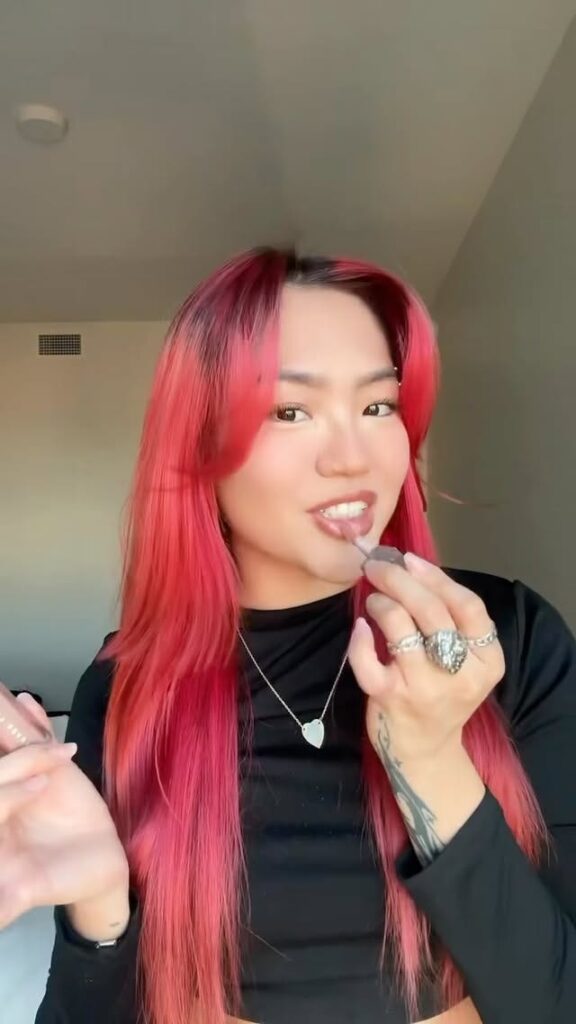
        While C3 groups cannot be overtly political, they can partner with creators who reflect the demographics and geographies of likely Democratic voters, helping to build cultural relevance, trust, and a more targeted audience. 

        Both types of groups can amplify creator campaigns through targeted paid media. For example, showing content made by college women in Ohio to other college women in Ohio. That surround sound effect normalizes voting within peer groups by showing that people who look like you, live where you live, and share your experiences are voting, and you should too.

        If Democratic groups and funders want voter registration to benefit Democrats and not MAGA, they must invest now, and creators should be central to that strategy.

        The clock is ticking: 

        “Any hope that the drift away from the Democratic Party would end organically with Mr. Trump’s election has been dashed by the limited data so far in 2025. There are now roughly 160,000 fewer registered Democrats than on Election Day 2024, according to L2’s data, and 200,000 more Republicans.”