Social Media Making Elections and Live Performance Cool Again?

Everyone at People First is obsessed with both Zohran’s campaign and Oh, Mary!, so we took a deep dive into their digital strategy.

Zohran Mamdani’s digital strategy tells you everything you need to know about the future of running for office

Tomorrow’s political candidates have a lot to learn from Zohran Mamdani in the field of digital campaigning. In order to better understand this, People First ran a comparative analysis of the discourse on key progressive moments versus the discourse around Zohran Mamdani since the start of the Trump presidency.
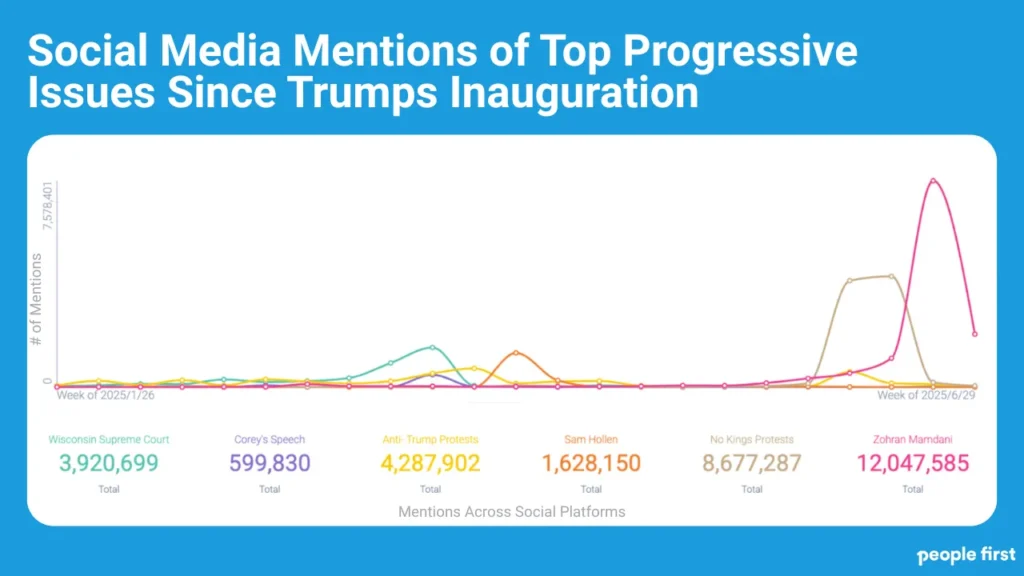
At first glance it is clear the Mamdani campaign is the most posted-about topic. Mamdani’s campaign has generated over 12 million posts, with a clear spike in posting around the primary election. The only progressive topic that came close was the nationwide No Kings Protest with over 8 million posts.
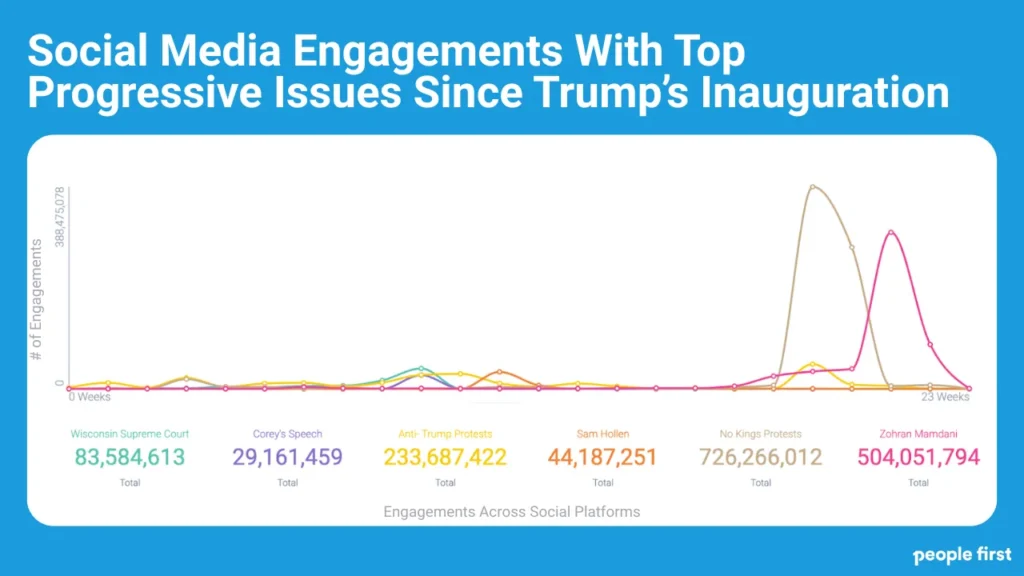
Analyzing this from an engagement standpoint (likes, comments, etc.), the No Kings Protest surpassed Mamdani’s campaign with 726 million engagements vs 504 million engagements respectively. While the No Kings Protest did generate more engagements, it’s important to note comparing a local election to nationwide protests is a little like comparing apples to oranges. The fact a local election got such widespread national attention is a strong sign of a well run campaign (I mean we even have UK based clients bringing up Mamdani’s campaign on weekly syncs).

Good messaging and digital strategy helped Mamdani’s election get national (and even international?) attention and become one of the most talked about progressive political events in 2025.
Source: Maya Hutchinson via LinkedIn

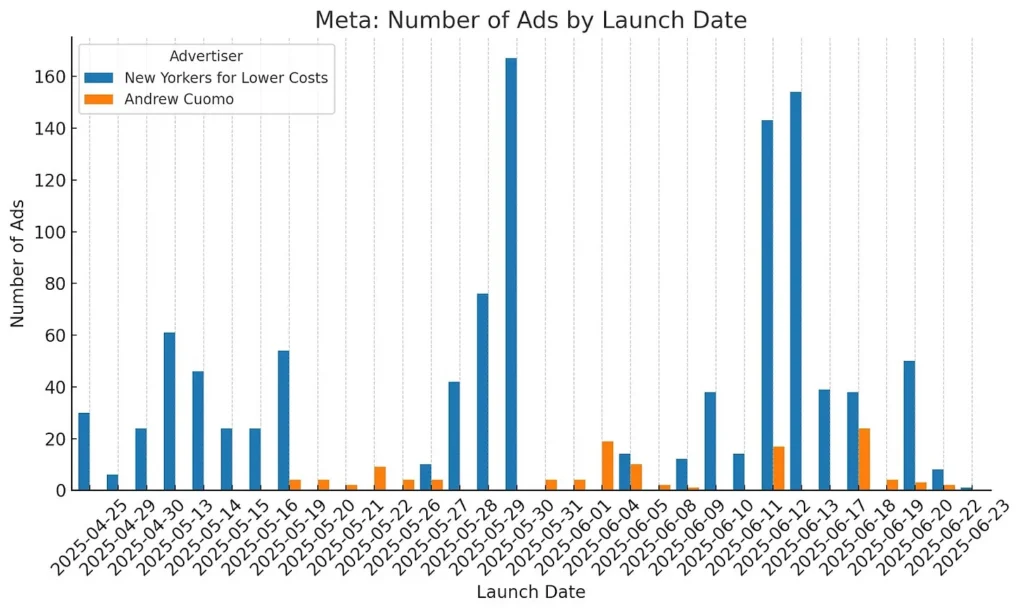
It is clear that Mamdani ran a campaign of iteration and strategy. Looking at the frequency of paid ad iteration on Meta Ads, Mamdani’s PAC ran far more variations of ads than Cuomo’s PAC leading up to the primary election. Paid social ads were not the only place this showed, Mamdani laid the groundwork for support with highly curated content across his socials as well.

Looking at some of the video content on his page in the days before the election, it is clear the Mamdani campaign had a much better grasp as to how to post in the age of algorithmic newsfeeds.

Getting people’s attention in 2025 is about more than putting a candidate in front of a camera and having them speak, it is about getting a wide variety of voices speaking passionately about issues they care about.

One of the videos Mamdani posted before the election was a powerful video of Letitia James giving a speech in front of a large crowd and comparing Mamdani to Obama. 
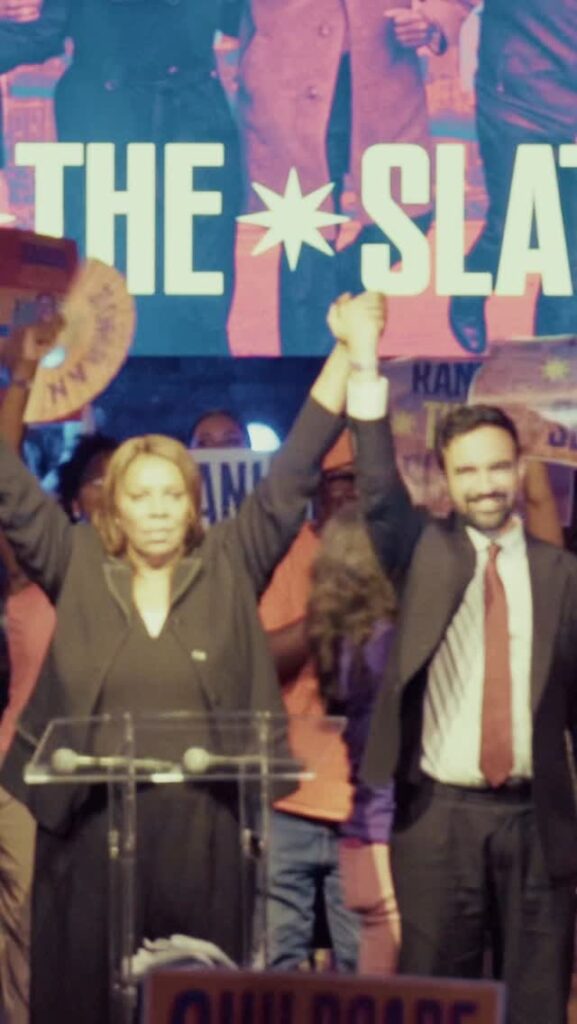
The view metrics show how engaging this video is, with 81k likes and 1.5 million views on Instagram at the time this article comes out.

Contrasting that, on the same day, Andrew Cuomo posted a video clip of Congressman Jim Clyburn endorsing him. 
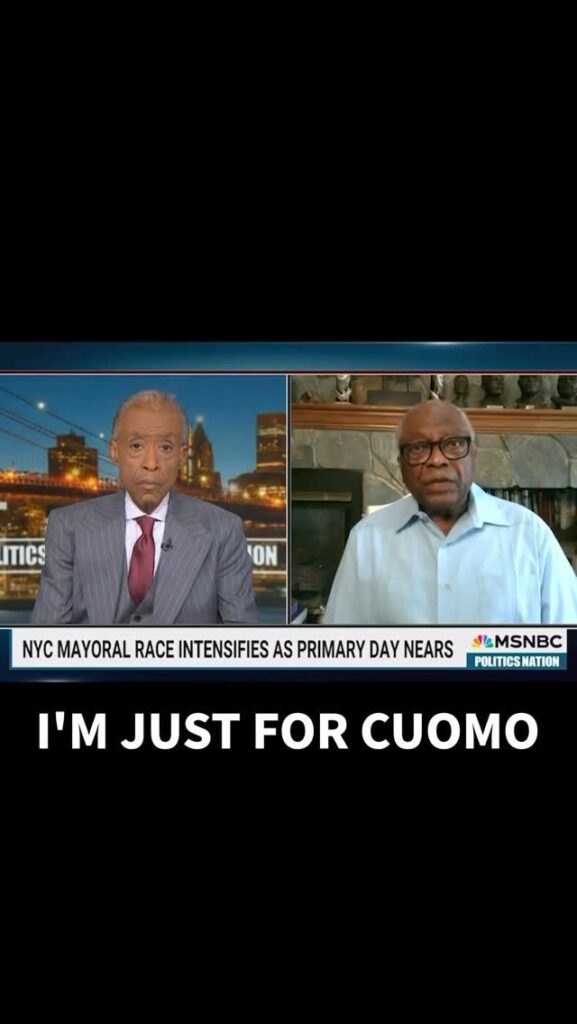
This clip is uninspiring, not optimized for social, and not engaging. The engagement metrics show this with 500 likes and 35k views on Instagram at the time this article comes out.

In the modern age, if you want people to care, you have to give them information in a format they are already consuming. For most people, short-form video is that format.

Contrary to popular belief, short-form video is not only for reaching the younger generation, AARP reports that 72% of adults in the US aged 50+ use Facebook, 50% use YouTube, and 33% use Instagram, all platforms which are doubling down on algorithmic short-form video.

Mamdani’s campaign also used ManyChat, an automation tool that sent over 77,000 messages to voters through Instagram DMs. The tool triggered DMs when users commented with specific words or tagged the campaign in their stories. This allowed the campaign to easily mobilize support, capture emails, and drive real action from social media interactions.

The personalized and curated nature of social video results in real-world action like no other medium before it. Mamdani boasted 29,000 door knockers, bringing the online into offline action.

Candidates that know how to take advantage of social video in the upcoming elections will be rewarded greatly and those that don’t, like Andrew Cuomo, will continue to lose elections.


Everyone at People First is obsessed with both Zohran’s campaign and Oh, Mary!, so we took a deep dive into their digital strategy.

Zohran Mamdani’s digital strategy tells you everything you need to know about the future of running for office

Tomorrow’s political candidates have a lot to learn from Zohran Mamdani in the field of digital campaigning. In order to better understand this, People First ran a comparative analysis of the discourse on key progressive moments versus the discourse around Zohran Mamdani since the start of the Trump presidency.

At first glance it is clear the Mamdani campaign is the most posted-about topic. Mamdani’s campaign has generated over 12 million posts, with a clear spike in posting around the primary election. The only progressive topic that came close was the nationwide No Kings Protest with over 8 million posts.

Analyzing this from an engagement standpoint (likes, comments, etc.), the No Kings Protest surpassed Mamdani’s campaign with 726 million engagements vs 504 million engagements respectively. While the No Kings Protest did generate more engagements, it’s important to note comparing a local election to nationwide protests is a little like comparing apples to oranges. The fact a local election got such widespread national attention is a strong sign of a well run campaign (I mean we even have UK based clients bringing up Mamdani’s campaign on weekly syncs).

Good messaging and digital strategy helped Mamdani’s election get national (and even international?) attention and become one of the most talked about progressive political events in 2025.

Source: Maya Hutchinson via LinkedIn

It is clear that Mamdani ran a campaign of iteration and strategy. Looking at the frequency of paid ad iteration on Meta Ads, Mamdani’s PAC ran far more variations of ads than Cuomo’s PAC leading up to the primary election. Paid social ads were not the only place this showed, Mamdani laid the groundwork for support with highly curated content across his socials as well.

Looking at some of the video content on his page in the days before the election, it is clear the Mamdani campaign had a much better grasp as to how to post in the age of algorithmic newsfeeds.

Getting people’s attention in 2025 is about more than putting a candidate in front of a camera and having them speak, it is about getting a wide variety of voices speaking passionately about issues they care about.

One of the videos Mamdani posted before the election was a powerful video of Letitia James giving a speech in front of a large crowd and comparing Mamdani to Obama. 

The view metrics show how engaging this video is, with 81k likes and 1.5 million views on Instagram at the time this article comes out.

Contrasting that, on the same day, Andrew Cuomo posted a video clip of Congressman Jim Clyburn endorsing him. 

This clip is uninspiring, not optimized for social, and not engaging. The engagement metrics show this with 500 likes and 35k views on Instagram at the time this article comes out.

In the modern age, if you want people to care, you have to give them information in a format they are already consuming. For most people, short-form video is that format.

Contrary to popular belief, short-form video is not only for reaching the younger generation, AARP reports that 72% of adults in the US aged 50+ use Facebook, 50% use YouTube, and 33% use Instagram, all platforms which are doubling down on algorithmic short-form video.

Mamdani’s campaign also used ManyChat, an automation tool that sent over 77,000 messages to voters through Instagram DMs. The tool triggered DMs when users commented with specific words or tagged the campaign in their stories. This allowed the campaign to easily mobilize support, capture emails, and drive real action from social media interactions.

The personalized and curated nature of social video results in real-world action like no other medium before it. Mamdani boasted 29,000 door knockers, bringing the online into offline action.

Candidates that know how to take advantage of social video in the upcoming elections will be rewarded greatly and those that don’t, like Andrew Cuomo, will continue to lose elections.