When the Crowd Gets Louder and Engagement Drops: Lessons from No Kings to EOY Giving
Online attention doesn’t always mean alignment. This month, Influencer Impact explores how movements lose the message and how creators can help campaigns reclaim it before end-of-year fundraising.
From Unity to Fragmentation: How the Online Narrative Around Saturday’s No Kings Protests Shifted
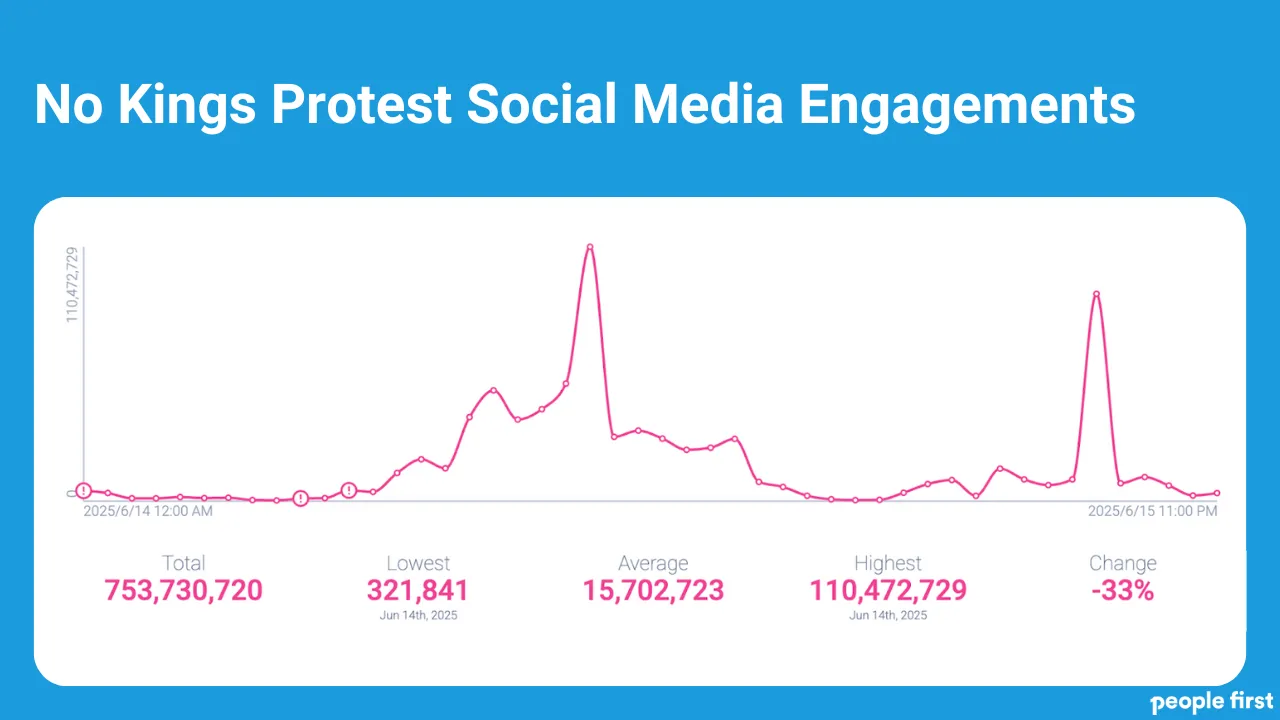
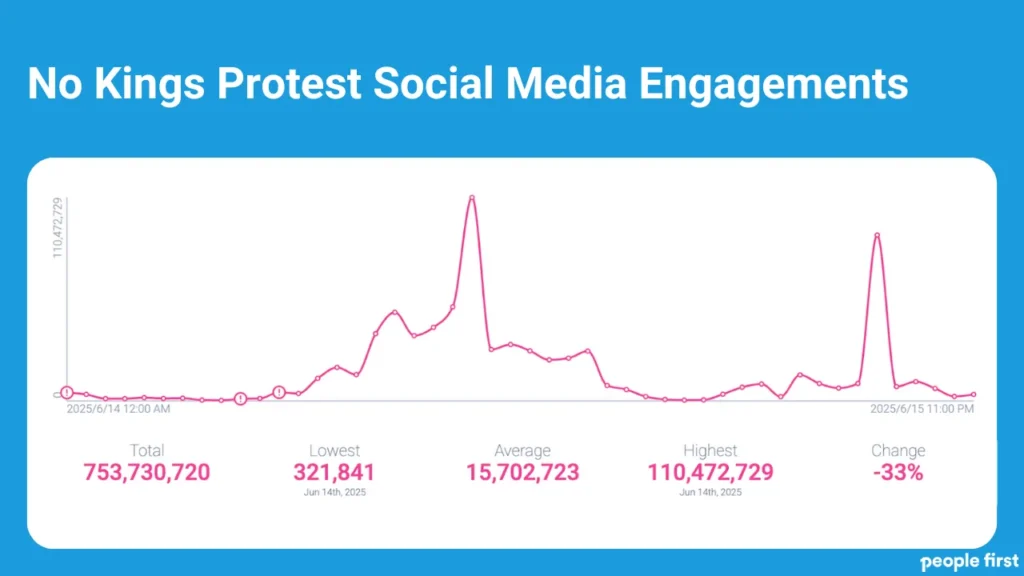
When comparing the October No Kings protests to the earlier wave in June 2025, one thing is clear: while online activity increased, the conversation became more divided and less engaging.
In the 24 hours during and after the October protests, the number of social posts grew by 12% compared to the June demonstrations. Yet total engagement dropped by 42%, signaling that although more people were posting, fewer were interacting.
Where the Conversation Happened Changed
Platform distribution played a major role in this shift. Conversations were more concentrated on X (formerly Twitter) — where discussions often skew more political and reactive — while engagement on Instagram fell 41% and TikTok dropped 38%. The move away from visual-first platforms appears to have reduced reach and virality overall.
The Right Shaped the Narrative
Another major difference was who dominated the conversation. In June, posts were largely driven by participants and supportive organizations, unified around surprise at the turnout and optimism about the movement’s momentum.
By October, right-leaning media had taken the lead in framing the story. Fox News and other conservative outlets produced more posts, often carrying a negative tone. Sentiment analysis showed higher mentions of “Antifa” and similar terms, suggesting attempts to discredit the movement or shift focus away from its message.
Competing Narratives Drowned Out the Message
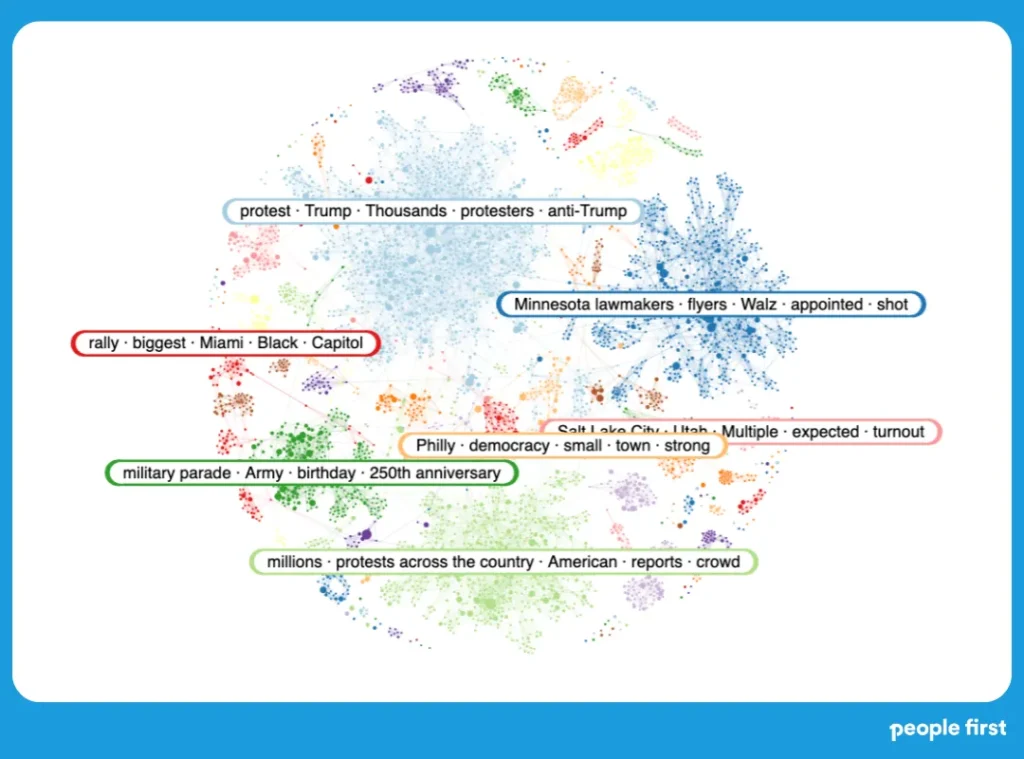
While the June protest narrative centered around unity and visibility — “look how many people showed up” — the October conversation was fragmented and reactive. Topics that dominated included:
Accusations that the media reused old protest footage
Claims questioning whether the protests were truly peaceful
Speculation about organizers’ motives
Some posts even praising Trump for “bringing peace to Gaza”
What It Means
The contrast between June and October highlights a growing challenge for movement organizers: attention doesn’t always translate to alignment. Even as participation and post volume rise, control over the online narrative can quickly slip away — especially when opponents are faster to define it.
For those planning future actions, the lesson is clear: message discipline and coordinated content strategies are as critical as turnout. Without them, the loudest voices online may not be the most representative ones.
No Fields Found.
Online attention doesn’t always mean alignment. This month, Influencer Impact explores how movements lose the message and how creators can help campaigns reclaim it before end-of-year fundraising.
From Unity to Fragmentation: How the Online Narrative Around Saturday’s No Kings Protests Shifted
When comparing the October No Kings protests to the earlier wave in June 2025, one thing is clear: while online activity increased, the conversation became more divided and less engaging.
In the 24 hours during and after the October protests, the number of social posts grew by 12% compared to the June demonstrations. Yet total engagement dropped by 42%, signaling that although more people were posting, fewer were interacting.
Where the Conversation Happened Changed
Platform distribution played a major role in this shift. Conversations were more concentrated on X (formerly Twitter) — where discussions often skew more political and reactive — while engagement on Instagram fell 41% and TikTok dropped 38%. The move away from visual-first platforms appears to have reduced reach and virality overall.
The Right Shaped the Narrative
Another major difference was who dominated the conversation. In June, posts were largely driven by participants and supportive organizations, unified around surprise at the turnout and optimism about the movement’s momentum.
By October, right-leaning media had taken the lead in framing the story. Fox News and other conservative outlets produced more posts, often carrying a negative tone. Sentiment analysis showed higher mentions of “Antifa” and similar terms, suggesting attempts to discredit the movement or shift focus away from its message.
Competing Narratives Drowned Out the Message
While the June protest narrative centered around unity and visibility — “look how many people showed up” — the October conversation was fragmented and reactive. Topics that dominated included:
Accusations that the media reused old protest footage
Claims questioning whether the protests were truly peaceful
Speculation about organizers’ motives
Some posts even praising Trump for “bringing peace to Gaza”
What It Means
The contrast between June and October highlights a growing challenge for movement organizers: attention doesn’t always translate to alignment. Even as participation and post volume rise, control over the online narrative can quickly slip away — especially when opponents are faster to define it.
For those planning future actions, the lesson is clear: message discipline and coordinated content strategies are as critical as turnout. Without them, the loudest voices online may not be the most representative ones.